There is a version of our coastline that exists only in old photographs, architectural drawings, and the ambitions of people who believed they could build something extraordinary along the Pacific.
In that version, Dana Point is a glamorous Mediterranean resort, with a grand hotel overlooking the harbor and visitors arriving for a distinctly European seaside experience. Capistrano Beach is an exclusive coastal enclave, with a private beach club and an identity intended to rival its neighbors. San Clemente is a meticulously planned Spanish village, where nearly every street, building, and public space follows a single architectural vision.
Some of these dreams became reality. Others were interrupted by economic collapse, personal tragedy, or simply the passage of time.
What remains is a coastline shaped as much by what never happened as by what did.
A Mediterranean Dream Above Dana Point
In the 1920s, Southern California was a place of extraordinary ambition. Land developers were transforming stretches of coastline into planned communities, selling not just property but an entirely new way of life.
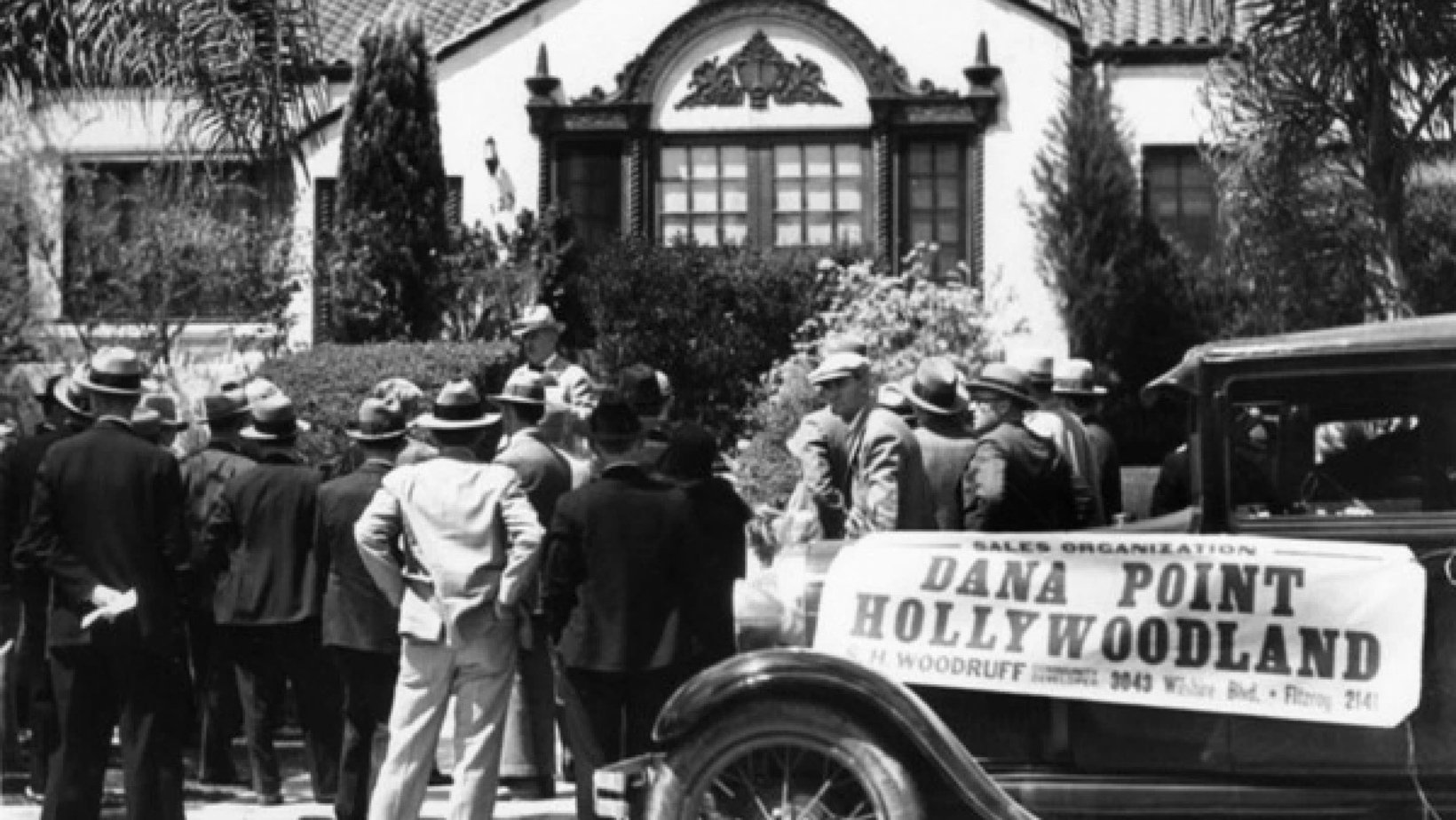
Among them was Sidney H. Woodruff, the developer associated with Hollywoodland and its now-famous hillside sign.
Woodruff turned his attention to Dana Point in the mid-1920s, envisioning a Mediterranean-inspired resort community that would rival the fashionable coastal destinations of Europe.
His plans were extensive. A grand hotel, the Dana Point Inn, would anchor the development, complemented by recreational amenities, landscaped grounds, and neighborhoods designed around a consistent architectural identity.
The hotel was intended to be far more than a place to stay. It would establish Dana Point as a destination.
Woodruff enlisted prominent architect Gordon B. Kaufmann to design the hotel and villas. Promotional materials presented a romantic vision of seaside living, with the natural drama of the headlands providing an extraordinary backdrop.
But the timing could hardly have been worse.
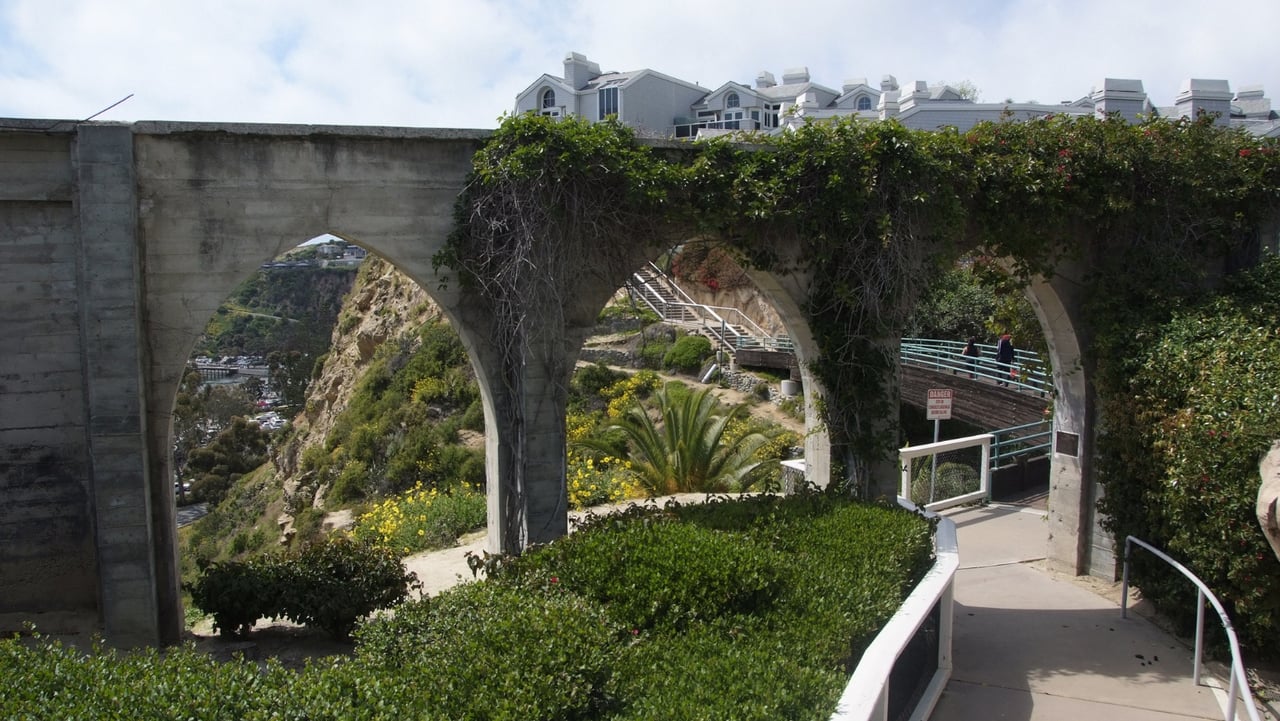
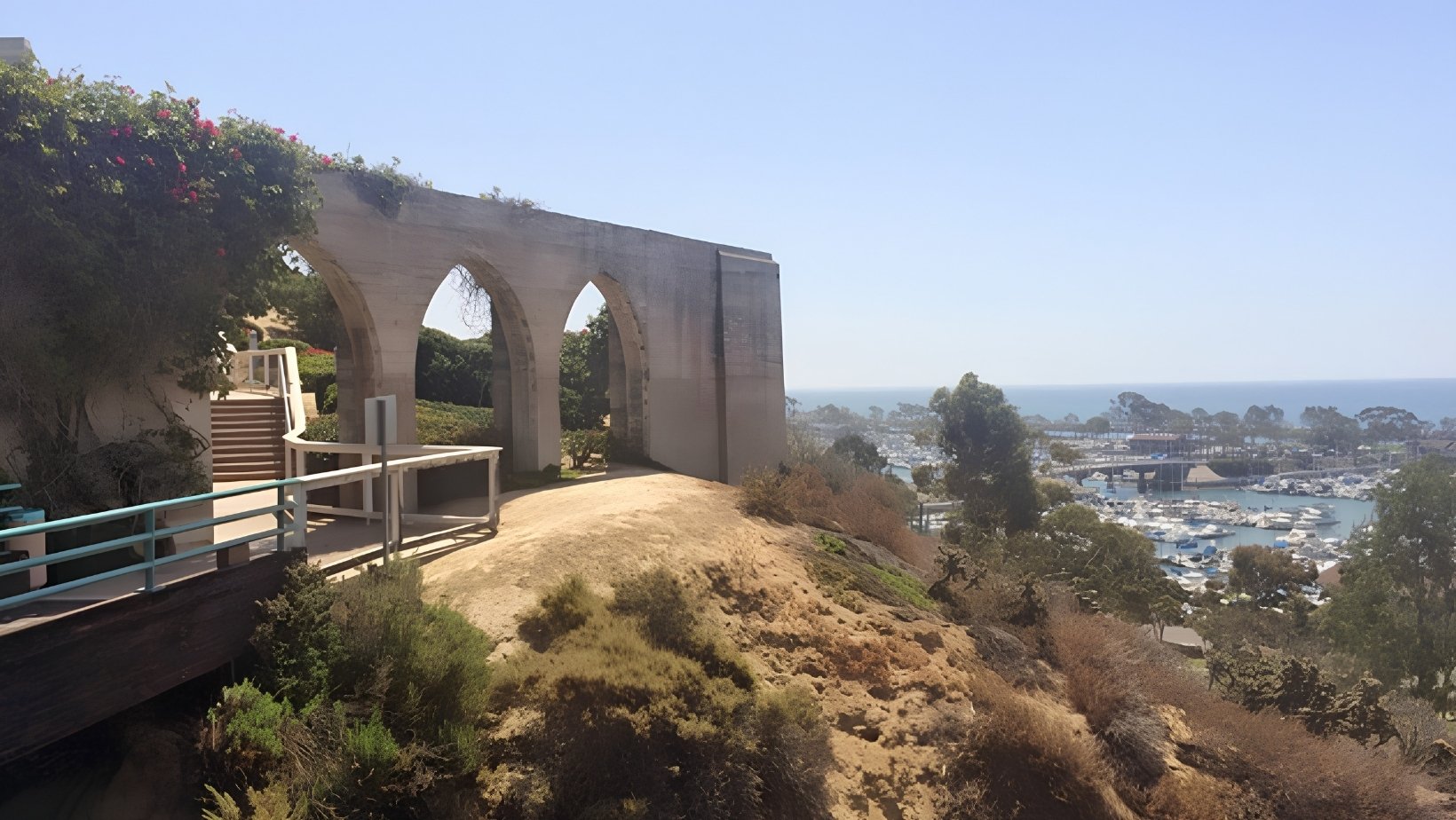
The stock market crash of 1929 and the ensuing Great Depression devastated the project's financial prospects. Construction of the Dana Point Inn stopped, leaving portions of its foundations and arches standing on the bluff.
The grand hotel was never completed.
Today, those surviving arches offer a tangible connection to a very different Dana Point. They are remnants of a destination that was imagined, promoted, and partially constructed, but never fully realized.
For anyone who has passed them without knowing their story, they are an extraordinary reminder that even the most ambitious plans can become footnotes in a place's history.
Capistrano Beach and the Doheny Ambition
Just south of Dana Point, another powerful family was imagining an equally ambitious future.
Edward L. Doheny was one of California's most prominent oil magnates, and his son, Edward "Ned" Doheny Jr., became closely associated with the development of Capistrano Beach.
The vision was one of coastal exclusivity. Homes overlooking the Pacific, recreational amenities, and a beach club intended to attract affluent residents to a new seaside community.
Unlike the Dana Point Inn, portions of this vision were actually built.
The Capistrano Beach Club opened in 1928, accompanied by a pier and residential development along the coastal bluffs. For a brief period, the area appeared poised to become one of Southern California's fashionable resort enclaves.
Then tragedy intervened.
In 1929, Ned Doheny died in a widely publicized shooting at Greystone Mansion in Beverly Hills. His death, followed by the economic collapse of the Depression, brought the family's ambitious development plans to an end.
In 1931, the Doheny family donated substantial coastal land to the State of California in Ned's memory, helping establish what became Doheny State Beach.
The exclusive coastal destination envisioned by the developers never fully materialized. Instead, part of the shoreline became a public resource enjoyed by generations of Californians.
It's an interesting reversal. Land once associated with a vision of private resort living became one of the area's most recognizable public beaches.
San Clemente and the Village That Changed Course
Farther south, Ole Hanson was pursuing a vision that would prove more enduring, though not entirely in the way he imagined.
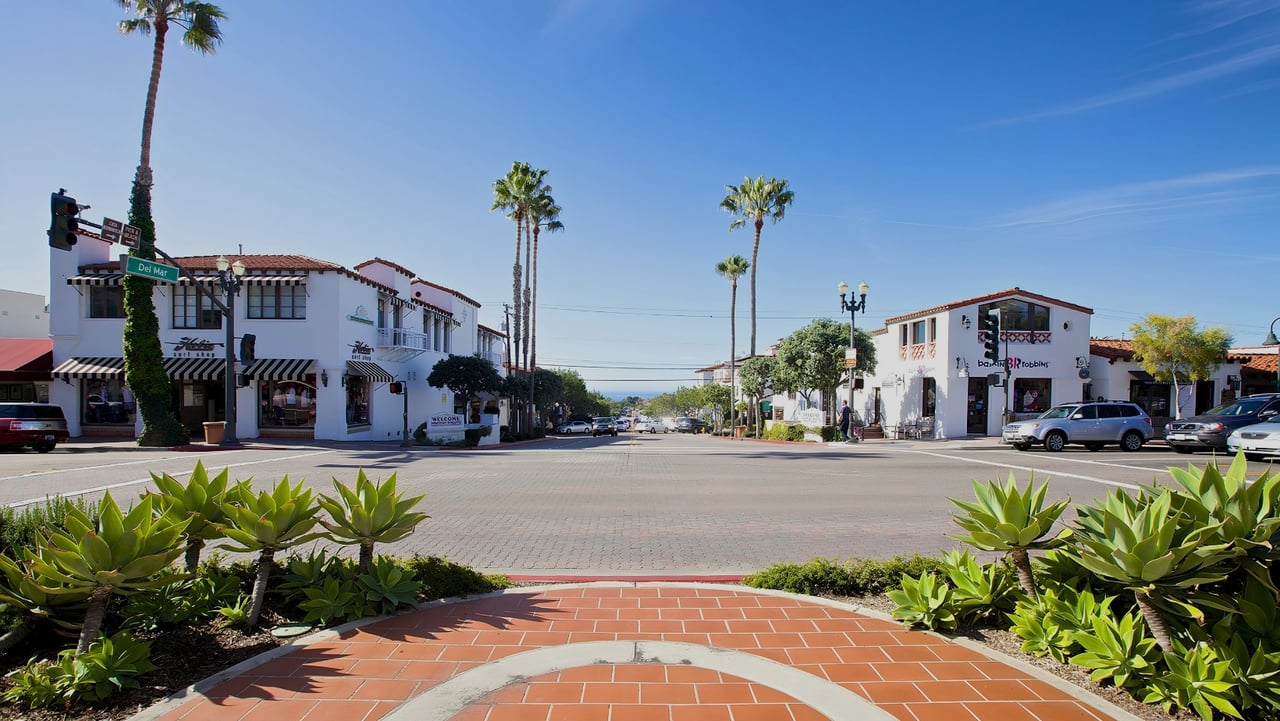
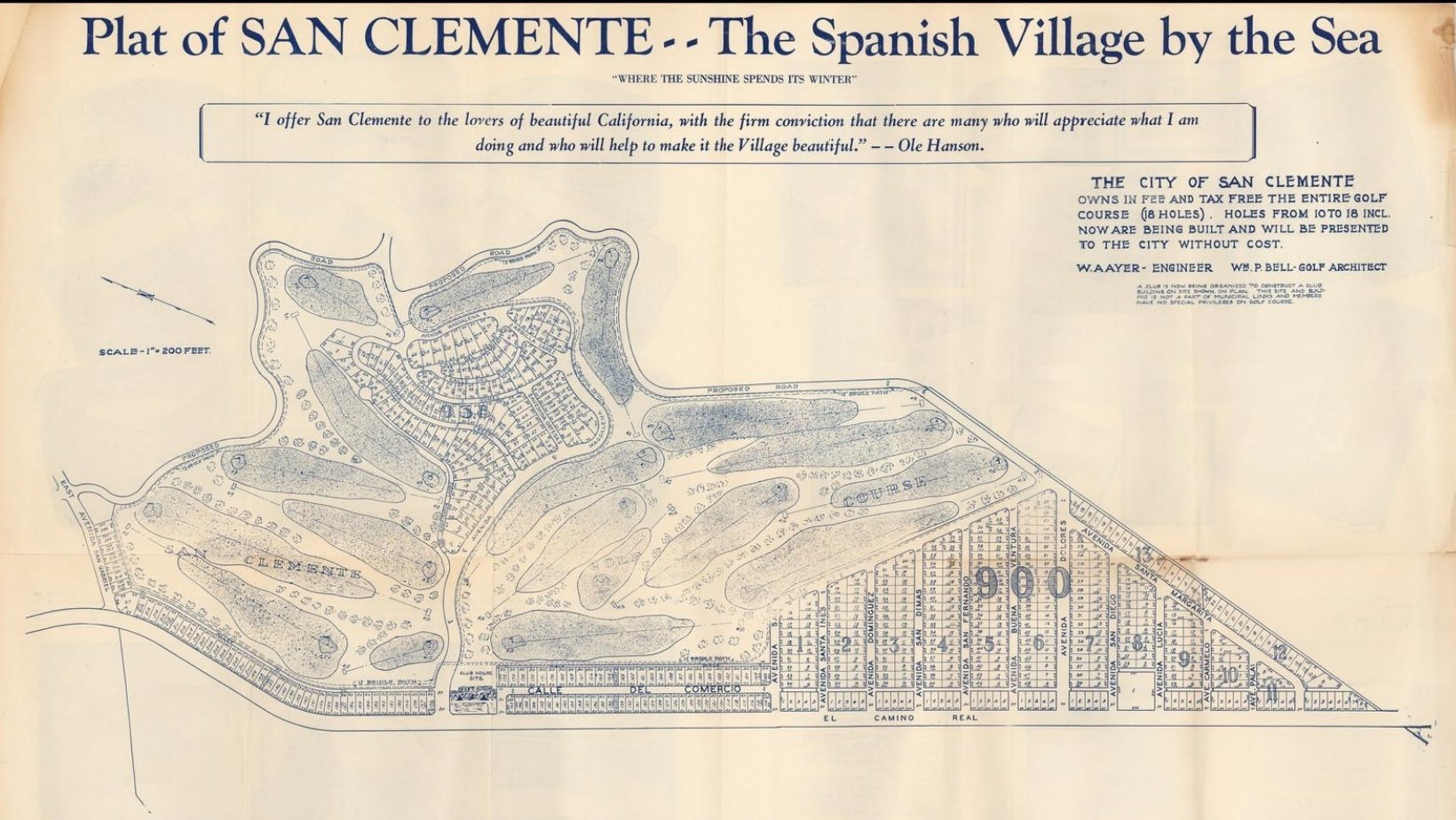
Hanson saw the undeveloped coastal hills of San Clemente as an opportunity to create a unified Spanish village, where architecture, landscaping, public amenities, and the natural terrain would work together.
His ambitions extended well beyond individual homes. He imagined a community of red-tile roofs and white plaster walls, with public parks, recreational facilities, a fishing pier, and streets following the contours of the land.
And much of it happened.
Unlike Woodruff's unfinished hotel, Hanson's early San Clemente took shape with remarkable speed. Homes rose across the hillsides, civic amenities opened, and the Spanish Village by the Sea began establishing its identity.
But the Great Depression interrupted Hanson's momentum as well.
Development slowed dramatically. Financial hardship forced Hanson to surrender his holdings, including his beloved Casa Romantica, and the city eventually relaxed the architectural restrictions that had helped define its earliest years.
San Clemente continued to grow, but not as the entirely unified Spanish village its founder had envisioned.
Over the decades, new architectural styles emerged. Neighborhoods expanded beyond the original town plan. The city became more varied, more layered, and ultimately more reflective of the generations who made it home.
What makes San Clemente interesting today is not that Hanson's original vision remained perfectly intact.
It's that enough of it survived to give the city a recognizable identity, even as the community evolved in ways he could not have anticipated.
The Future That Never Arrived
The ambitions of the 1920s weren't the last attempts to dramatically reshape this coastline.
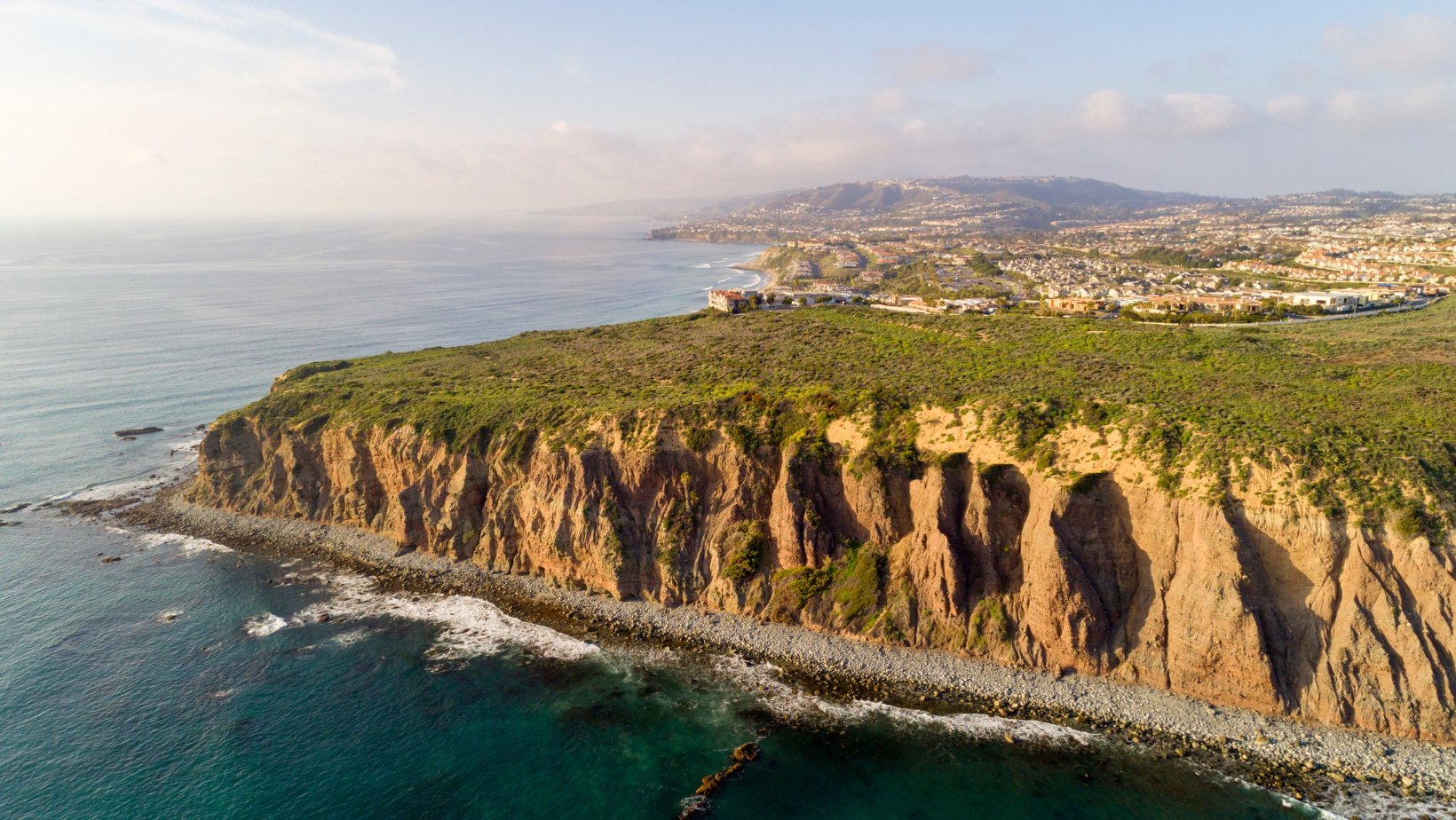
Decades later, Dana Point's Headlands became the focus of another series of development proposals.
A county-approved plan in 1981 contemplated hundreds of homes and two hotels. By 1993, a revised proposal envisioned 394 residences and a 400-room resort on the 121-acre property overlooking the harbor.
The proposals sparked debates over density, development, public access, and the future of one of Orange County's most prominent coastal landscapes.
The Headlands would eventually be developed under a different plan, with residential neighborhoods, open space, and public trails rather than the earlier resort concepts.
The story illustrates something that has repeated throughout coastal Orange County's history: the tension between the extraordinary value of coastal land and the equally powerful desire to preserve what makes it special.
What Might Have Been
It's tempting to imagine the alternate versions of these communities.
A Dana Point anchored by a grand Mediterranean hotel. A Capistrano Beach defined by private resort culture. A San Clemente that remained almost entirely Spanish Colonial Revival in character.
Would those places have been more beautiful? More interesting? More desirable?
Perhaps. But they would also have been fundamentally different.
The history of coastal Orange County is often told through the people who built it, the architecture they left behind, and the communities that grew from their ideas.
Just as revealing are the plans that never reached completion.
Because sometimes an unfinished foundation, a vanished pier, or an architectural rendering tells us as much about a place as the buildings that remain.
And sometimes, the most interesting thing about the coast we know is how close it came to becoming somewhere else.
Real estate rooted in people + place.®
At Inhabit, we believe understanding a community means knowing the stories behind its streets, neighborhoods, and landmarks, including the ones that never quite came to be. It's this appreciation for the places we call home that informs the way we approach real estate every day.
Local Perspective
Thoughtful market insight, local stories, and a deeper look at life along the coast. Delivered with intention, not noise.